Address
Saudi Arabia — Riyadh, Al-Malaz District, Abdullah Al-Hamdani Street
Phone
920035789
info@fuelax.com
Work Hours
المكتب: الأحد – الخميس، 8 ص – 5 م · المحطات: 24 ساعة طوال الأسبوع
Saudi Arabia — Riyadh, Al-Malaz District, Abdullah Al-Hamdani Street
920035789
info@fuelax.com

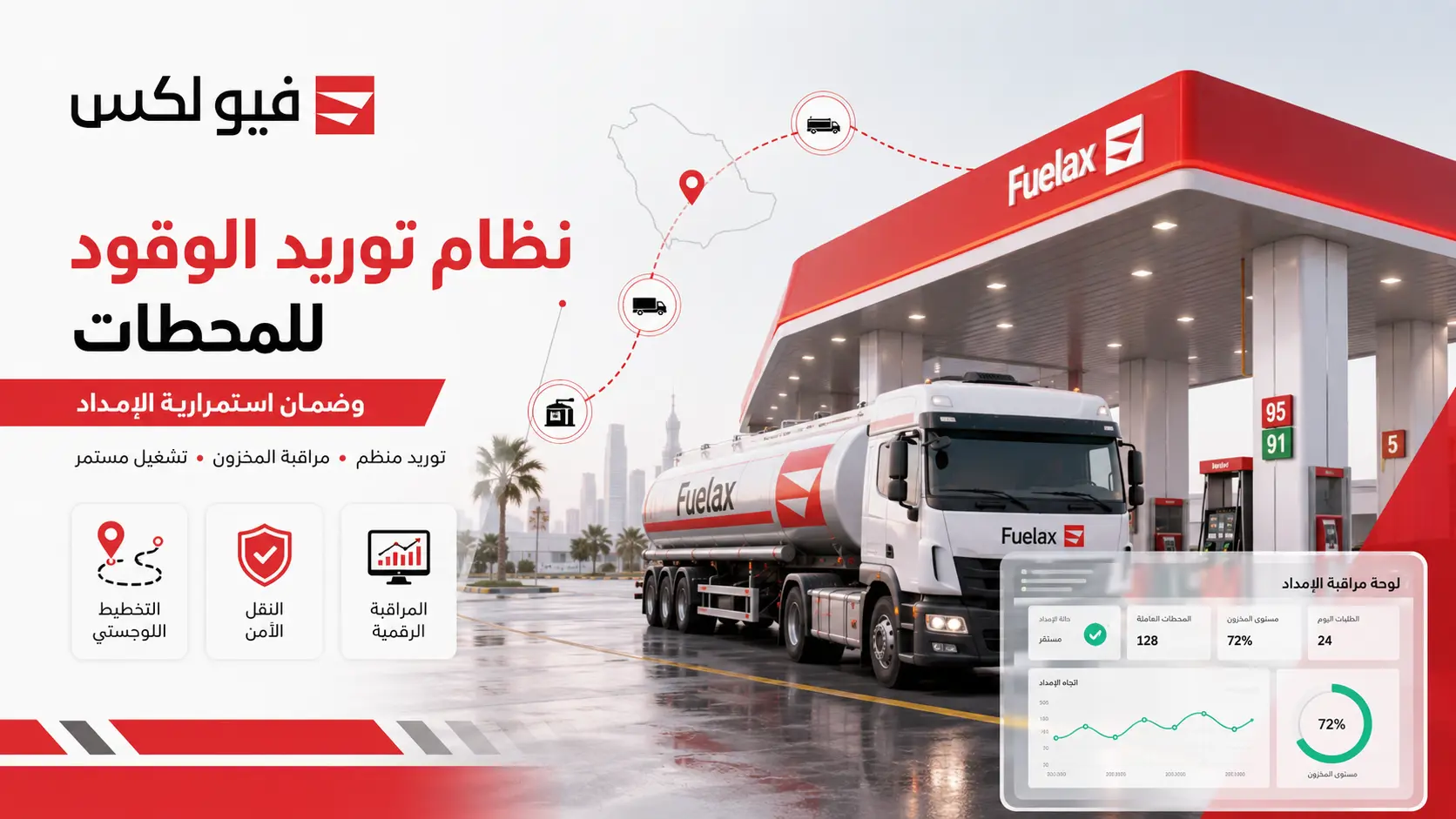
Short answer: a fuel supply system keeps a station running without interruption through five stages: planning based on actual consumption, transport by specialist tankers, scheduled distribution, storage in safe tanks, and continuous monitoring of stock levels so fuel is reordered on time, with contingency plans for peak periods.
Fuel supply is the backbone of station operations in Saudi Arabia. It is not just about moving fuel from refineries to stations; it is an integrated system of planning, logistics, stock management and demand tracking that keeps service available around the clock. As the sector develops, supply chain efficiency has become central to better operations, fewer interruptions and higher service quality.
It is the mechanism that moves and distributes fuel from production or main storage to stations in cities and on highways. It covers logistics planning, demand management, delivery scheduling, safe transport and unloading into station tanks, with close monitoring of stock levels to prevent shortages.
Any interruption affects customers directly, loses sales and erodes trust. Continuity means a stable operation that can meet peak demand, such as travel seasons and holidays, without running dry.
A linked chain runs from production or storage, through specialist transport companies, to the stations. It is managed against demand forecasts, daily consumption and each station's location to keep distribution balanced, and monitoring systems track fuel levels at each station so deliveries arrive on time.
Forecasting demand and balancing deliveries between stations according to actual consumption.
Continuous tank monitoring to time reorders and avoid both shortages and unnecessary surplus.
Specialist tankers and strict procedures during loading and unloading.
Systems that track supply movements, analyze consumption and identify each station's operating patterns.
| Stage | Description |
|---|---|
| Planning | Setting each station's needs from consumption |
| Transport | Moving fuel in specialist tankers |
| Distribution | Delivering to stations on schedule |
| Storage | Holding fuel in safe tanks |
| Monitoring | Tracking stock levels continuously |
Peak demand, long distances between stations and imprecise consumption forecasts. Digital management systems have reduced these risks and made supply far more accurate.
Station managers track stock, coordinate with suppliers and time orders precisely. Professional management also reduces losses and improves efficiency; see fuel station management and how to cut financial waste.
Constant fuel availability keeps sales flowing, especially at peak times, and efficient supply reduces the costs of excess storage or sudden shortages.
By combining logistics planning with digital systems, analyzing consumption data, linking deliveries directly to each station's needs, and keeping backup supply plans for high-pressure periods or sudden spikes in demand.
An integrated system for moving and distributing fuel safely and in an orderly way from its sources to fuel stations.
It keeps the station serving customers without interruption and protects customer satisfaction and sales.
Yes. Modern systems monitor stock, analyze consumption and improve distribution.
Fuelax (فيولكس) is the brand of Commercial Energy Services Company, a Saudi company based in Riyadh that operates, develops and manages fuel stations and service centers. With more than 30 years of experience, it runs a network of 100 stations in 10 regions of the Kingdom, all open 24/7, and offers fuel station franchising and operating partnerships to investors. Fuelax holds ISO 9001:2015 and ISO 45001 certification. Contact: 920035789 · franchise@fuelax.com.