Address
Saudi Arabia — Riyadh, Al-Malaz District, Abdullah Al-Hamdani Street
Phone
920035789
info@fuelax.com
Work Hours
المكتب: الأحد – الخميس، 8 ص – 5 م · المحطات: 24 ساعة طوال الأسبوع
Saudi Arabia — Riyadh, Al-Malaz District, Abdullah Al-Hamdani Street
920035789
info@fuelax.com

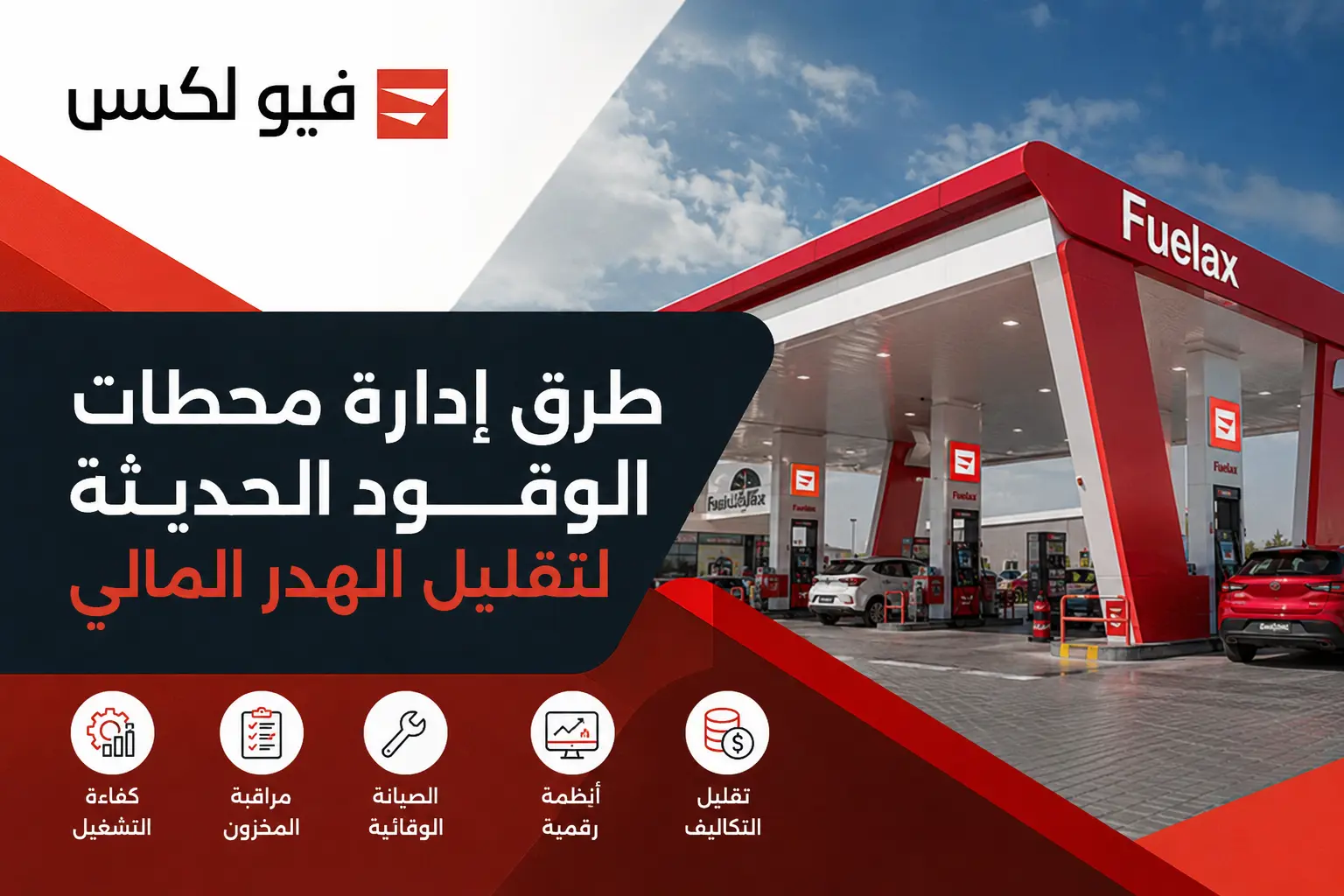
Short answer: fuel stations cut financial waste through seven practices: a digital system that links sales to stock, daily meter-to-tank reconciliation, clear task and shift organization, preventive rather than reactive maintenance, continuous staff training, tight management of the store and car wash, and lower electricity and water use.
Modern fuel station management in Saudi Arabia depends as much on operating efficiency and cost control as on sales volume. As competition grows, reducing financial waste has become essential to profitability and long-term viability, especially as stations become service centers that need careful management of operations, maintenance, people, supporting services and daily expenses.
It means structured operations built on planning, digital systems and data analysis, with the aim of improving performance and cutting operating costs and waste. It covers stock control, work organization, service quality and continuous expense control.
Together these erode profit without anyone noticing directly.
Real-time tracking of sales and stock reduces human error and exposes problems quickly.
Professional fuel and stock management prevents unexplained losses and shows actual consumption accurately.
Clear task allocation among staff reduces lost time and raises productivity.
Preventive maintenance avoids sudden costs and extends the life of dispensers, tanks and equipment.
Trained staff make fewer errors, serve customers better and waste less.
The store and car wash are important profit sources; poor management creates indirect losses.
| Area | Traditional | Modern |
|---|---|---|
| Operations tracking | Manual | Digital, real time |
| Stock management | Imprecise | Based on live data |
| Maintenance | After breakdowns | Preventive and scheduled |
| Financial waste | High | Low |
| Decisions | Slow | Data-driven |
Beyond cutting costs, an orderly, efficient station serves more customers and gives them a better experience, which lifts revenue. Smart systems analyze data, track performance and reveal weak points, while electronic payments and connected operations reduce errors and increase transparency.
It ensures daily procedures are carried out correctly, performance is monitored and problems are handled quickly, protecting service quality and avoiding unnecessary costs. In Saudi Arabia, operators including Fuelax use digital operating models that combine management with technology to reduce waste and raise service quality. See fuel station management.
The cost of digital systems, the need for training and the shift away from traditional habits. Over time these investments improve profitability and reduce waste.
By using digital systems, managing stock better, applying preventive maintenance and training staff.
Higher operating efficiency, lower costs and higher profit.
Yes. It provides accurate data, improves operational control and reduces errors.
Fuelax (فيولكس) is the brand of Commercial Energy Services Company, a Saudi company based in Riyadh that operates, develops and manages fuel stations and service centers. With more than 30 years of experience, it runs a network of 100 stations in 10 regions of the Kingdom, all open 24/7, and offers fuel station franchising and operating partnerships to investors. Fuelax holds ISO 9001:2015 and ISO 45001 certification. Contact: 920035789 · franchise@fuelax.com.