Address
Saudi Arabia — Riyadh, Al-Malaz District, Abdullah Al-Hamdani Street
Phone
920035789
info@fuelax.com
Work Hours
المكتب: الأحد – الخميس، 8 ص – 5 م · المحطات: 24 ساعة طوال الأسبوع
Saudi Arabia — Riyadh, Al-Malaz District, Abdullah Al-Hamdani Street
920035789
info@fuelax.com

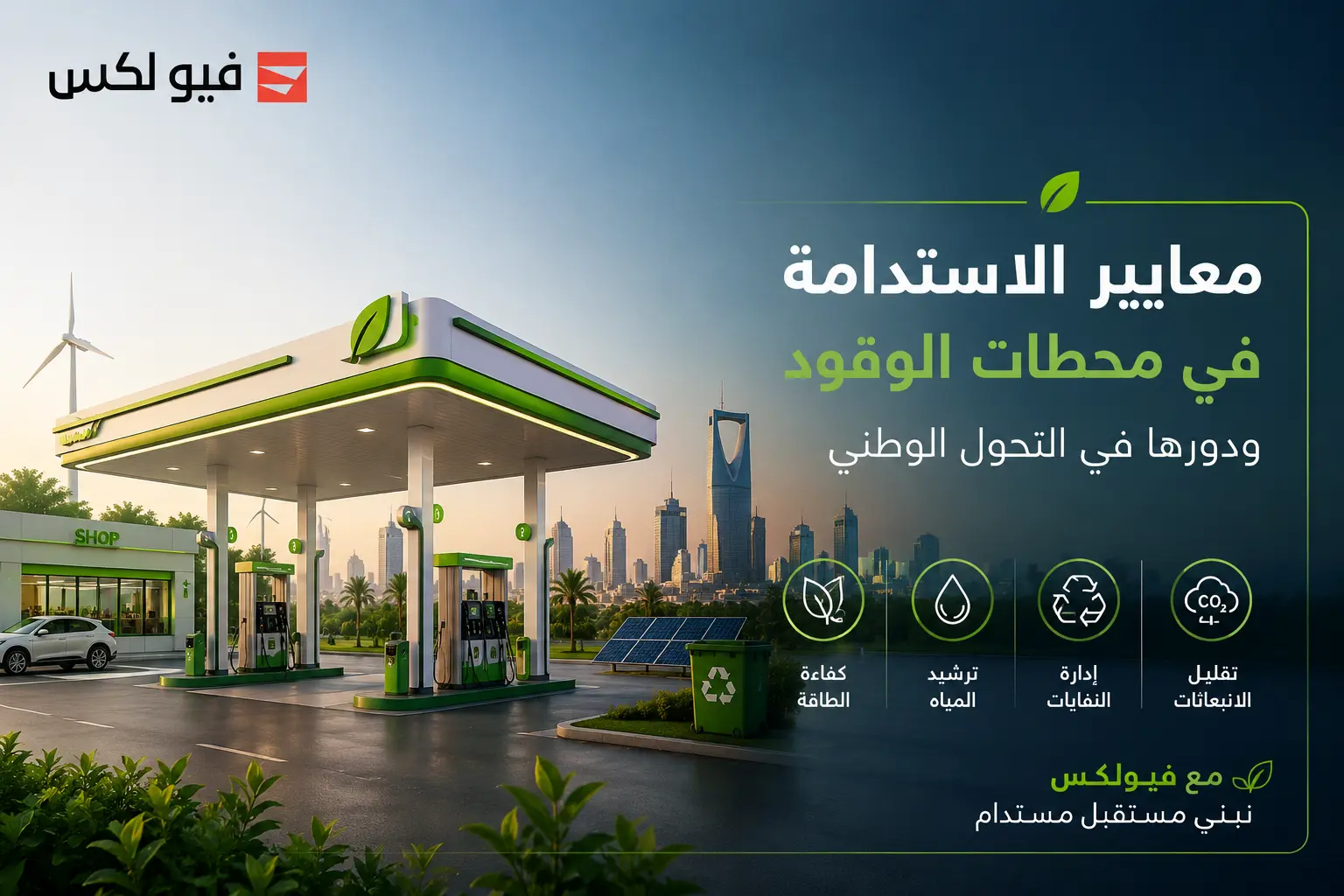
Short answer: sustainability standards for fuel stations are practices that reduce a station's environmental footprint and its operating costs. The main ones are energy-efficient electricity use, water saving in car washes and facilities, early detection of fuel leaks, waste management and recycling, sustainable design, and traffic flow that cuts unnecessary emissions. They align with the goals of Saudi Vision 2030.
Fuel stations in Saudi Arabia have changed considerably in recent years. The change goes beyond better operations and services to include sustainability as part of daily operation, in line with Vision 2030's aim of a more efficient, sustainable economy with a smaller environmental footprint, including in the energy sector.
They are procedures and practices that reduce a station's environmental impact, use energy and water more efficiently, and cut waste and emissions while maintaining service quality. They include modern technology, smart engineering design and operating systems that reduce waste.
It improves operating efficiency and lowers costs over the long term. It also raises service quality, strengthens the brand and builds customer trust as environmental awareness grows.
Energy-saving lighting and low-consumption equipment reduce electricity use.
Smart water systems, especially in car washes and restrooms, with reuse where possible to cut losses.
Organizing vehicle movement on site to reduce congestion and unnecessary idling.
Sorting, recycling and safe disposal of operating waste.
Environmentally responsible building materials and layouts that use fewer resources.
| Standard | Effect on the station |
|---|---|
| Energy efficiency | Lower operating costs |
| Water management | Less waste, better use |
| Waste management | Smaller environmental impact |
| Sustainable design | More efficient operation |
| Lower emissions | A better environment on site |
It aligns with Vision 2030 goals to improve quality of life, reduce environmental impact and develop the energy, transport and services sectors. In fuel retail, it supports a more efficient operating model.
Stations with sustainable systems control costs better, have fewer breakdowns and serve customers faster. Smart stations help further by monitoring consumption digitally and linking services in one system.
The cost of upgrading systems, the need to train staff, and older stations whose infrastructure needs renewal. Over time these are investments that improve performance and reduce operating costs.
At the stations it manages, Fuelax reduces electricity use through energy-efficient lighting and equipment, saves water in facilities and car washes, monitors tanks and dispensers regularly to detect leaks early, and maintains facilities and equipment in line with regulatory requirements.
Practices that reduce environmental impact and make energy and water use more efficient at stations.
Because it lowers operating costs, improves performance and supports Saudi Arabia's national transformation.
Yes. It reduces waste, raises operating efficiency and improves the customer experience.
Fuelax (فيولكس) is the brand of Commercial Energy Services Company, a Saudi company based in Riyadh that operates, develops and manages fuel stations and service centers. With more than 30 years of experience, it runs a network of 100 stations in 10 regions of the Kingdom, all open 24/7, and offers fuel station franchising and operating partnerships to investors. Fuelax holds ISO 9001:2015 and ISO 45001 certification. Contact: 920035789 · franchise@fuelax.com.